https://superspl.at/s?id=6d447051 Outside in 3DGS.
https://superspl.at/s?id=3a972b94 Indoor in 3DGS.
Turfiction
The overall project refers to: https://turfiction.org/
Turfiction studies multispecies architecture inspired by the Icelandic turf house. Fiction meets turf in a storytelling of a world to come that calls for a contingent and growing coexistence. We approach the island’s traditional architecture, which was brutally eradicated in the twentieth century, as a superorganism that consists of turf, complicated root systems, soil, fungi, microbes, water, lichen, stones, wood, insects, cows, sheep and humans. Acting as a wise interlocutor, the turf house impacts thinking about how future architecture can become accountable for forming new relations or “temporal belongings” (Bastian 2014) between species, reflecting upon the benefits of sustainable co-living (Puig de la Bellacasa 2017).
The project reflects on the turf house ontology, socio-material entanglements, multispecies relations, time, and space as essential elements for creating architectural complexes of interdependent cohabitation and ecosystem thinking and doing. Calling into being collaborative living with other-than-humans enhances human sensorial pathways and enriches understanding of the nonhuman sphere.
Absorbing, carrying and transmitting narratives and visions of architecture of multispecies cohabitation, the project celebrates “different modes of attentive immersion” (van Dooren 2016) on our journey to open practices of co-worlding and earthen politics. The project is carried out by anthropologists, ecologists, soil scientists, mycologists, botanists, microbiologists, artists and architects.
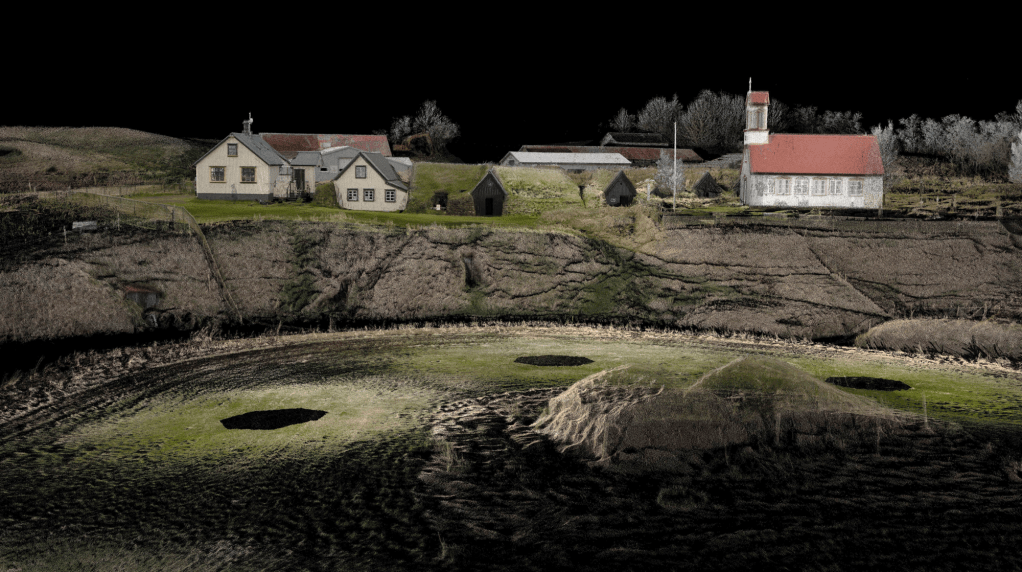
The Keldur turf house in southern Iceland is one of the oldest and most remarkable examples of traditional Icelandic architecture. Believed to date back to the 11th century, Keldur stands as a testament to the resourcefulness and resilience of Iceland’s early settlers. Constructed primarily from locally sourced turf, stone, and wood, this historic farmhouse complex includes living quarters, a chapel, and outbuildings, all designed to provide warmth and shelter in the harsh Icelandic climate. The thick turf walls and sod roofs offer exceptional insulation, showcasing the ingenuity of ancient building techniques. Today, Keldur is preserved as a cultural heritage site, offering visitors a unique window into medieval Icelandic life and the enduring legacy of turf construction.
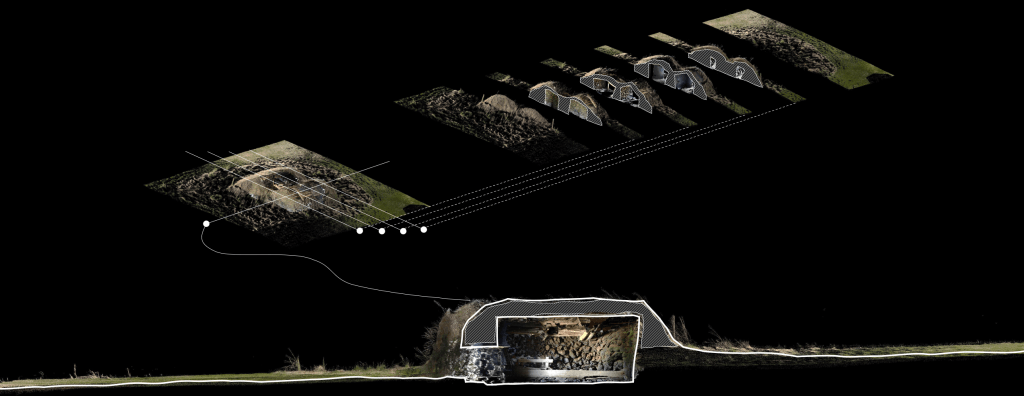
The common Icelandic turf house has a large foundation made of flat stones; upon this is a wooden frame to hold the load of the turf. The turf is fitted around the frame in blocks, often with a second layer, or in the more fashionable herringbone pattern.
The interior layout of the Keldur turf house maximizes warmth and functionality, reflecting the practical ingenuity and communal lifestyle of Iceland’s early settlers. Upon entering, visitors are greeted by a central hallway, which connects various rooms built from sturdy timber and insulated with thick turf walls. The main living area, or baðstofa, served as the heart of the home, where family members would gather for warmth, work, and social activities. Adjacent to the living quarters is the kitchen, equipped with a stone hearth that was essential for cooking and heating. Additionally, there are storage rooms and a pantry to keep supplies and food preserved.
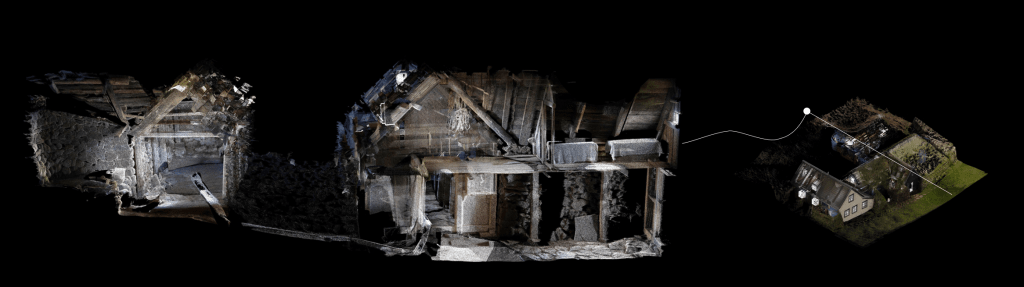
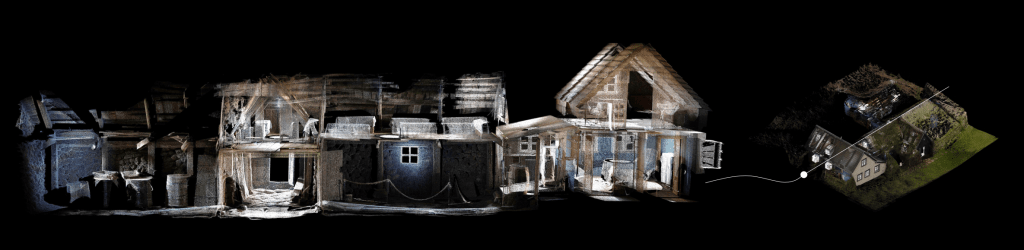
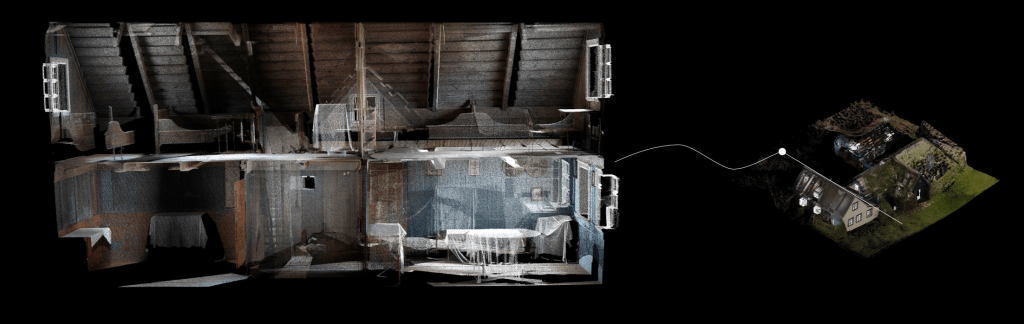
Adjacent to the historic Keldur turf house stands a modest yet significant church, reflecting the deep-rooted Christian heritage of the region. This small wooden chapel, with its simple yet elegant design, complements the rustic charm of the Keldur farmstead. Traditionally serving as a spiritual sanctuary for the local farming community, the church has witnessed centuries of Icelandic history and religious practice. Its interior, characterized by minimalistic Nordic design, creates a serene atmosphere for contemplation and worship.
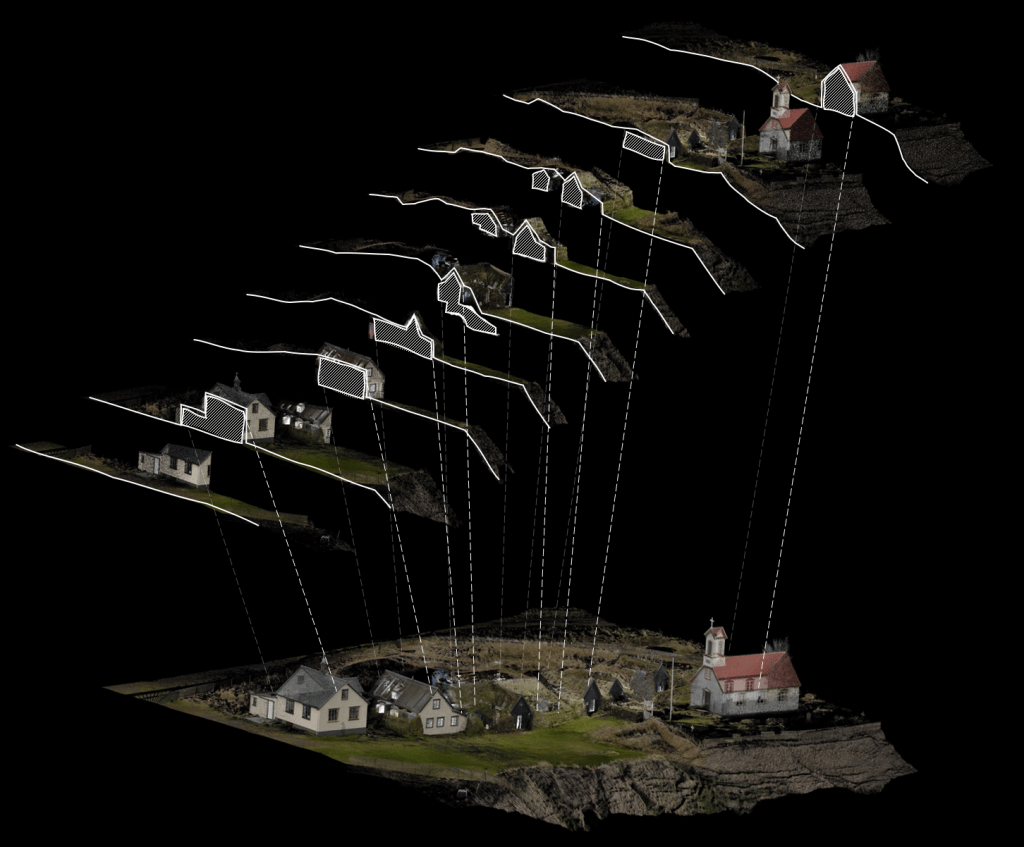
This thick turf layer, often reaching up to one meter in depth, provides superior thermal insulation, crucial for withstanding Iceland’s harsh and variable climate. In winter, it retains heat, keeping the interior warm and habitable, while in summer, it helps maintain a cool environment inside. The outer turf layer also protects against wind and rain, ensuring the durability and longevity of the structure. This natural insulation method not only exemplifies sustainable building practices but also highlights the settlers’ profound connection to their environment and resourcefulness in utilizing available materials to create comfortable living spaces.
Reference:
Bastian. M. 2014. “Time and Community: A Scoping Study.” Time and Society 23(2), 137–66.
Puig de la Bellacasa, M. (2017). Matters of Care. Speculative Ethics in More than Human Worlds. University of Minnesota.
van Dooren, T. Kirksey, E. & Münster, U. (2016). Multispecies Studies, Cultivating Arts of Attentiveness. Environmental Humanities 8(1),1-23.
 YAO Chaowen